The Mughal Empire: From Babur to the Taj Mahal
In April 1526, a 43-year-old prince from Ferghana in Central Asia marched into India with about 12,000 men and a handful of field guns — and defeated an army many times larger. Babur, a descendant of both Timur and Genghis Khan, founded the Mughal Empire, which would rule most of the Indian subcontinent for three centuries and leave behind some of the most famous buildings on Earth, including the Taj Mahal. At its height it was one of the richest empires in the world.
In short
The Mughal Empire began in 1526 when Babur defeated Ibrahim Lodi at the First Battle of Panipat. Under Akbar (1556–1605) it became a great empire; under Shah Jahan (1628–1658) it built the Taj Mahal; under Aurangzeb (1658–1707) it reached its greatest extent — and after his death in 1707 it slowly declined until the British ended it in 1857.
Babur and Humayun: a shaky start
Babur won the First Battle of Panipat on 21 April 1526, and a year later he defeated a confederacy of Rajput princes at Khanwa. But his empire was fragile: he died in 1530, and his son Humayun lost the throne in 1540 to the Afghan ruler Sher Shah Suri. Humayun spent fifteen years in exile, regained Delhi in 1555, and died the next year from a fall down the stairs of his library. The empire seemed finished before it had properly begun.
It was saved by Humayun's thirteen-year-old son, Akbar, who took the throne in 1556. His regent Bairam Khan won the Second Battle of Panipat that same year, defeating the Hindu king Hemu, and Akbar went on to rule for almost fifty years — one of the longest and most successful reigns in Indian history.
Akbar the Great
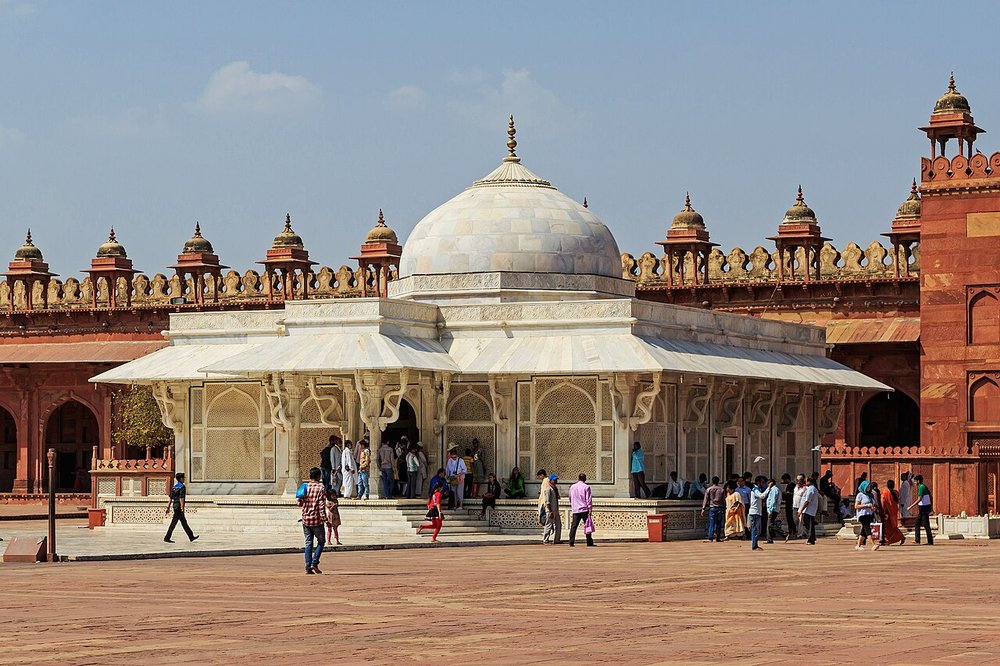
Akbar (reigned 1556–1605) built the Mughal Empire into a lasting state. He conquered all of northern India and part of the Deccan, married Rajput princesses and made Rajput chiefs his generals, and built an administration — the mansabdari system of ranked officials — that ran the empire for two centuries. His policy of sulh-i-kul, "universal tolerance", treated all religions alike: he abolished the tax on non-Muslim pilgrims, invited Hindus, Parsis, Christians, and Muslims to debate religion at his court, and built a new capital, Fatehpur Sikri, near Agra. He never renounced Islam, but he took an active interest in other faiths, and his empire held together peoples of many religions and languages.
Jahangir and Shah Jahan: the golden age of art
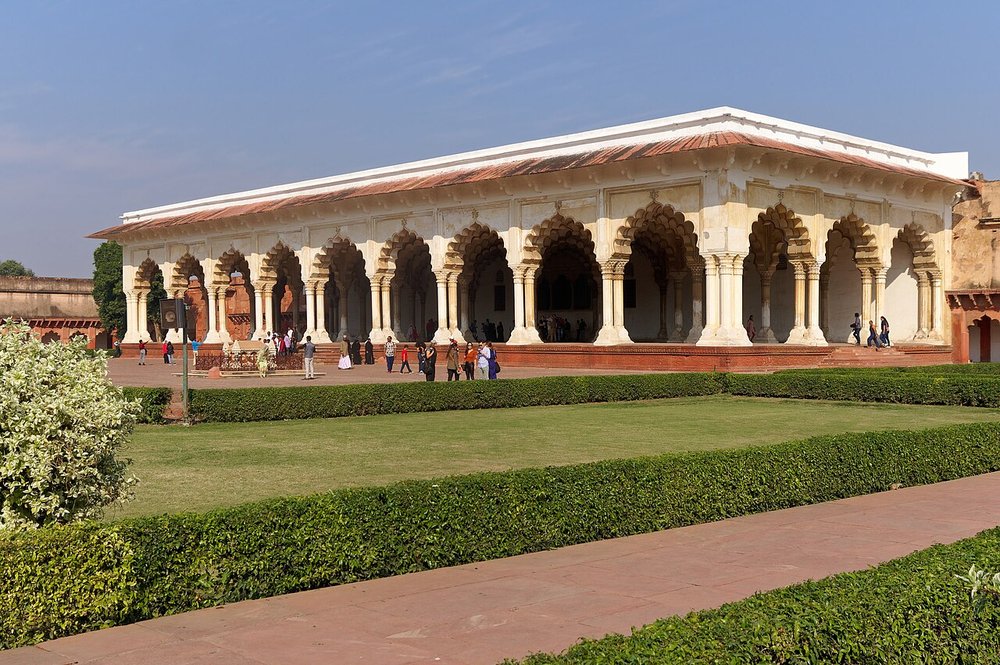
Akbar's son Jahangir (reigned 1605–1627) kept his father's system and made Mughal painting one of the finest arts of the age. His son Shah Jahan (reigned 1628–1658) took it further: his reign is the cultural zenith of the empire. He built the Taj Mahal at Agra as a mausoleum for his wife Mumtaz Mahal — construction began in 1632 and took more than twenty years — and in Delhi he built the Red Fort and the great Jama Masjid mosque. The Taj Mahal, a UNESCO World Heritage Site, is now one of the most famous buildings in the world.
Aurangzeb and the decline
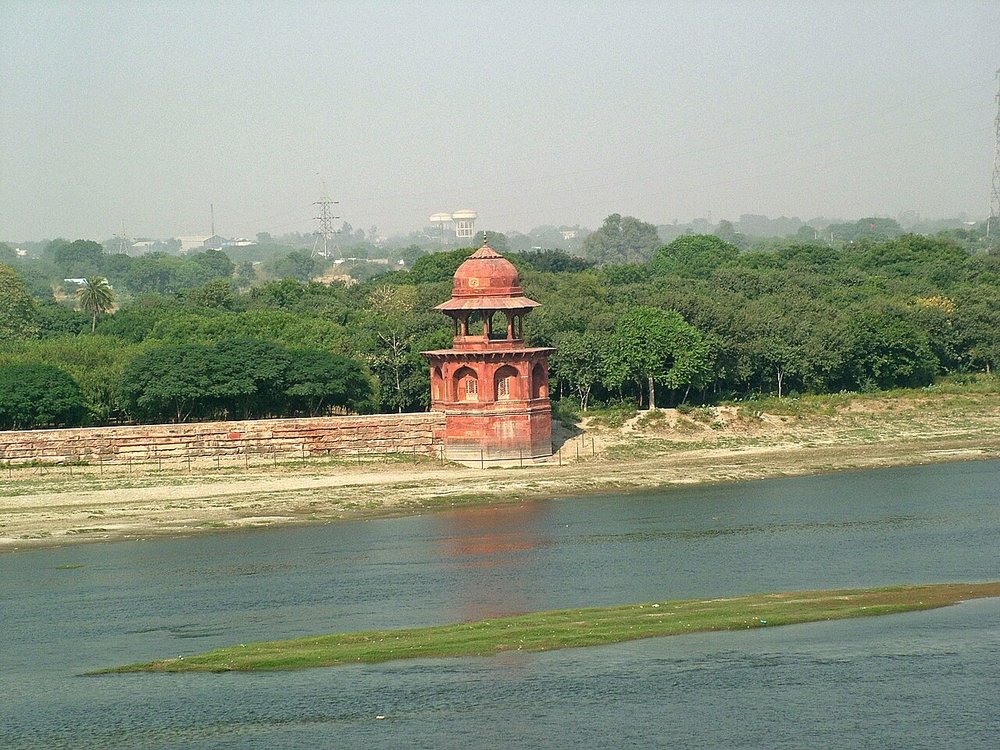
Shah Jahan's son Aurangzeb took the throne in 1658 after a war of succession in which he imprisoned his father in the Red Fort at Agra for the rest of his life. Under Aurangzeb (reigned 1658–1707) the empire reached its greatest size, stretching across most of the subcontinent, including the Deccan kingdoms of Bijapur and Golconda. But the long Deccan wars drained the treasury, and his intolerance of other religions — he destroyed Hindu schools and temples and persecuted Sikhs — aroused strong opposition. By the time he died in 1707, his authority was disputed throughout his dominions.
After Aurangzeb the empire broke apart. Regional powers — the Marathas, the Sikhs, and the rulers of Bengal, Hyderabad, and Awadh — took control of its provinces, and the emperors in Delhi became figureheads. The British East India Company, which had arrived as traders, became the real power in India. The last Mughal emperor, Bahadur Shah II, was a figurehead in the revolt of 1857, and the British exiled him to Rangoon in 1858. The Mughal dynasty was over, but its administrative systems, its Persianate culture, and its buildings shaped India for centuries after.
| Emperor | Reign | Known for |
|---|---|---|
| Babur | 1526–1530 | Founded the empire at Panipat |
| Akbar | 1556–1605 | Built the empire; sulh-i-kul tolerance |
| Jahangir | 1605–1627 | Mughal painting at its height |
| Shah Jahan | 1628–1658 | The Taj Mahal and the Red Fort |
| Aurangzeb | 1658–1707 | Greatest extent; decline begins |
Sources: Wikipedia, "Mughal Empire"; Encyclopaedia Britannica, "Mughal Dynasty Timeline"; UNESCO, "Taj Mahal"; World History Encyclopedia, "Mughal Empire" Checked 27 November 2026.