The Mauryan Empire and Ashoka: India's First Great Empire
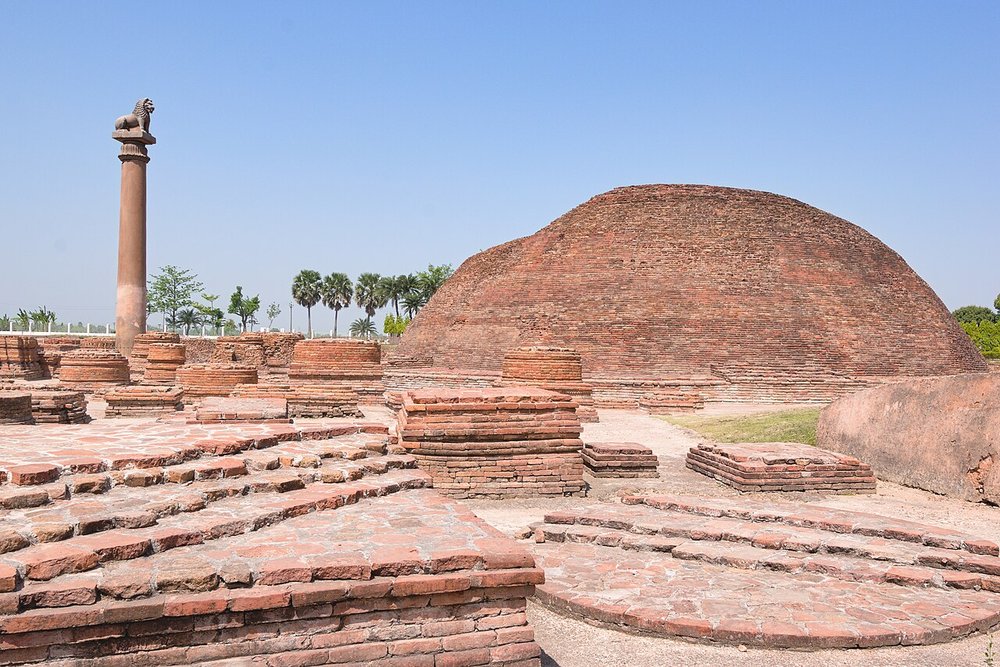
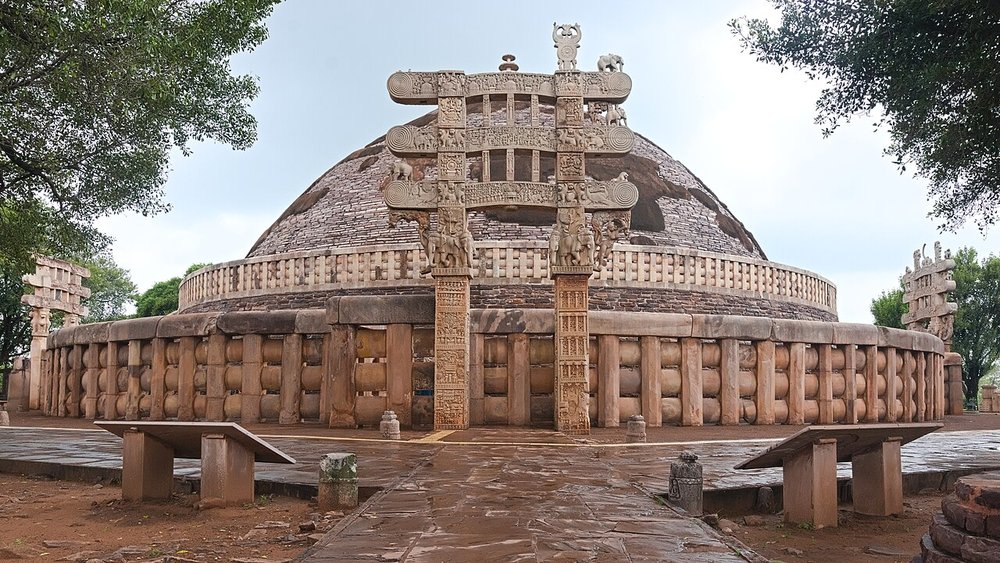
In 321 BCE, a young man named Chandragupta Maurya overthrew the Nanda dynasty of Magadha and founded something India had never seen: an empire stretching across most of the subcontinent. Within two generations it reached its peak under his grandson Ashoka — a conqueror who, after one terrible war, gave up conquest altogether and tried to rule by moral example instead. His words, carved into rocks and pillars across India, are the earliest decipherable written records of Indian history.
In short
The Mauryan Empire, founded around 321 BCE by Chandragupta Maurya, was India's first empire, covering most of the subcontinent. Its greatest ruler, Ashoka (reigned about 268–232 BCE), conquered Kalinga in about 261 BCE, was horrified by the bloodshed, and spent the rest of his reign promoting Buddhism and his moral code, dhamma, through inscriptions carved in stone.
Chandragupta and the founding of the empire
Chandragupta Maurya founded the empire around 321 BCE, with the guidance of his adviser Chanakya, also known as Kautilya, to whom the treatise on statecraft called the Arthashastra is attributed. From his capital at Pataliputra — modern Patna in Bihar — he defeated the Nanda dynasty and extended his rule westward to Afghanistan and south into the Deccan. Around 305 BCE he made a treaty with Seleucus Nicator, one of Alexander the Great's generals, gaining territory in the east of the old Persian empire in exchange for 500 war elephants. The Greek ambassador Megasthenes, who visited his court, left an account of a well-organised capital with a large standing army and a bureaucracy that taxed and administered a vast realm.
Chandragupta was succeeded by his son Bindusara (reigned about 298–272 BCE), about whom much less is known. Then came his grandson, Ashoka, who took the throne around 268 BCE. Under Ashoka the empire reached its greatest extent, controlling the major cities and trade routes of the subcontinent except for the deep south.
The Kalinga war
The turning point of Ashoka's reign came in about 261 BCE, in the eighth year after his coronation, when he attacked Kalinga, an independent kingdom on the east coast, in what is now Odisha and northern Andhra Pradesh. Kalinga was wealthy from trade and had a powerful army, and the war was brutal. Ashoka's own Rock Edict 13 records the toll in his own words: 100,000 people killed, 150,000 deported, and many more who died of other causes.
The edict also records what the war did to the conqueror. After the Kalingans had been conquered, Ashoka wrote, he came to feel a strong inclination towards dhamma, a love for dhamma, and deep remorse for having conquered them. He pledged never again to wage a war of conquest. This is the only major war he fought after taking the throne, and it marked the end of the empire-building that had begun with his grandfather.
Dhamma, the edicts, and Buddhism
What Ashoka put in place of conquest was dhamma — a moral code of right conduct, tolerance, and respect for all sects, drawn from Buddhist principles but meant for all his subjects, whatever their religion. He had it carved into rocks and pillars across the empire, in local languages and scripts, so that officials and travellers could read it. The edicts ordered the planting of trees and the digging of wells along roads, forbade the killing of certain animals, and urged respect for parents, servants, and other faiths. They are the earliest decipherable written records of Indian history.
Ashoka also embraced Buddhism and sponsored missionaries to Sri Lanka, north-west India, and Central Asia — a step that helped Buddhism become a world religion. His lion capital at Sarnath, where the Buddha gave his first sermon, was adopted in 1950 as the national emblem of independent India, and the wheel on it appears on the Indian flag.
The fall of the empire
After Ashoka's death in 232 BCE, the empire did not last long. His successors quarrelled, the provinces broke away, and within about fifty years the last Mauryan ruler, Brihadratha, was assassinated in 185 BCE by his own general, Pushyamitra Shunga. The empire was gone, but its model survived: the idea of a single Indian empire, ruled from the Ganges plain, would be attempted again and again — by the Guptas, the Mughals, and finally the British.
| Ruler | Reign | Known for |
|---|---|---|
| Chandragupta Maurya | c. 321–298 BCE | Founded the empire; treaty with Seleucus |
| Bindusara | c. 298–272 BCE | Held the empire together |
| Ashoka | c. 268–232 BCE | Kalinga war; dhamma; the edicts |
Sources: Wikipedia, "Maurya Empire"; Wikipedia, "Kalinga War"; World History Encyclopedia, "Ashoka the Great"; Encyclopaedia Britannica, "Ashoka" Checked 27 November 2026.