The Gupta Golden Age: Zero, Poetry, and the Classical Age of India
About five hundred years after the Mauryas fell, a second great empire rose in northern India — smaller and looser than the first, but remembered even more fondly. The Gupta age, from about 320 to 550 CE, is called the golden age of India, and what made it golden was not the size of its armies but the brilliance of its mind. In these two centuries India gave the world the number zero, a great university, some of the finest poetry ever written in Sanskrit, and art that still draws visitors to the caves of Ajanta.
In short
The Gupta Empire ruled northern and central India from about 320 to 550 CE. Under Chandragupta II (about 375–415 CE) it reached its peak, and its scholars developed the decimal system and the concept of zero, its astronomer Aryabhata explained eclipses and the Earth's rotation, and its court produced the poet Kalidasa and the university of Nalanda.
From a small kingdom to an empire
The Guptas rose to power in northern India around 320 CE, when Chandragupta I founded the dynasty — helped by a marriage alliance with the Lichchhavi family. His son Samudragupta, who reigned from about 335 to 375 CE, was a great conqueror, and later historians nicknamed him the "Napoleon of India". Yet on his own coins he chose to be shown not with a sword, but playing music — a hint that this empire valued culture as much as conquest.
The peak came under Samudragupta's son, Chandragupta II, who ruled from about 375 to 415 CE and took the title Vikramaditya. He defeated the Western Kshatrapas in the west, extended the empire to the sea coast of Gujarat, and made Ujjain his second capital. A Chinese pilgrim named Faxian, who travelled across India in those years, wrote home about a prosperous, peaceful, well-run land where people were largely free to follow their own ways. His court at Pataliputra is said to have hosted the Navaratnas, the "nine gems" — nine scholars of exceptional brilliance, among them the poet Kalidasa.
The gift of zero
The most consequential idea of the Gupta age was a small one: nothing. Indian mathematicians created a symbol for zero and, with it, the decimal system — the ones, tens, and hundreds, where the position of each digit changes its value. With just ten symbols, any number in the world could be written. The idea spread from India to the Arab world and then to Europe, and every calculation on every phone and computer today still rests on it.
The greatest scientist of the age was Aryabhata, born in 476 CE. While still in his twenties he wrote the Aryabhatiya, in about 499 CE, one of the most important scientific texts of the ancient world. In it he calculated pi to four decimal places (3.1416), explained that lunar eclipses are caused by the Earth's shadow falling on the Moon, and — centuries before Copernicus became famous for the same idea — said that the Earth rotates on its own axis. His work was written in Sanskrit, in northern India, while Europe was struggling to preserve what Greece and Rome had known.
Poetry, art, and Nalanda
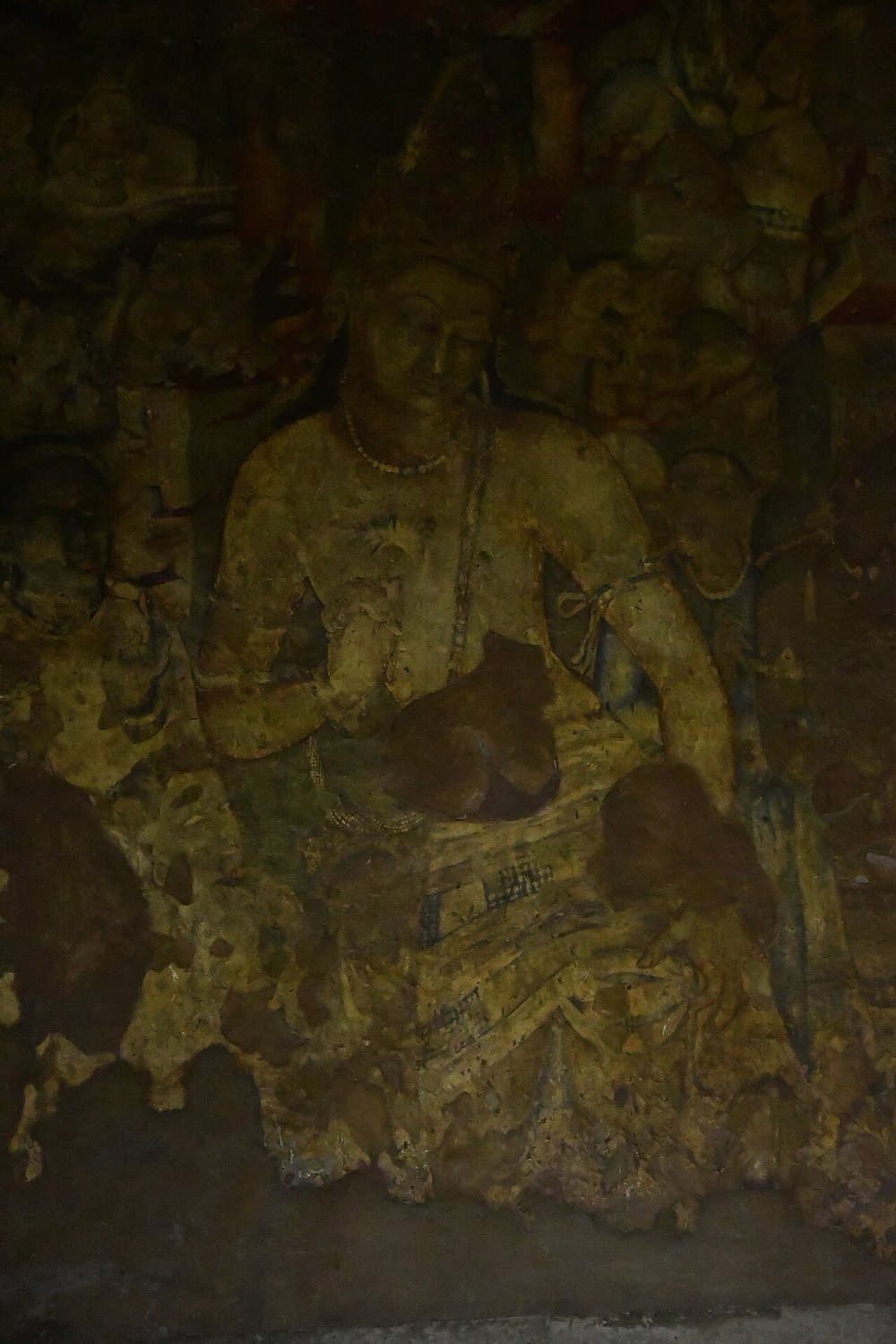
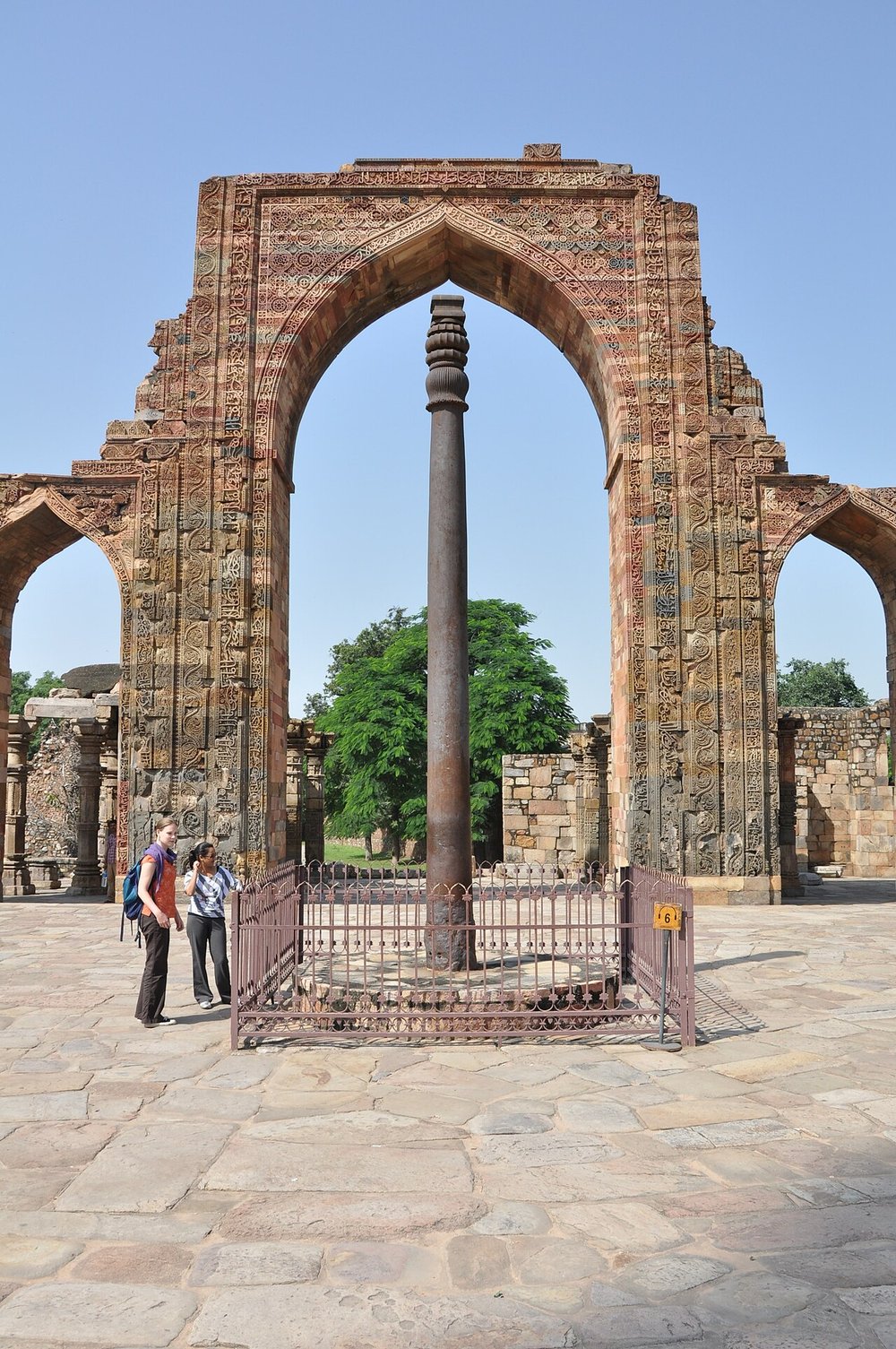
The Gupta court produced Kalidasa, the greatest poet of classical Sanskrit, whose plays — above all Abhijnanashakuntalam, the story of Shakuntala — are still performed today. The cave temples of Ajanta, painted in this period, hold some of the finest murals of the ancient world, and the iron pillar at Mehrauli in Delhi, erected in Chandragupta II's reign, is famous for a different reason: after more than 1,600 years in the open air, it has barely rusted.
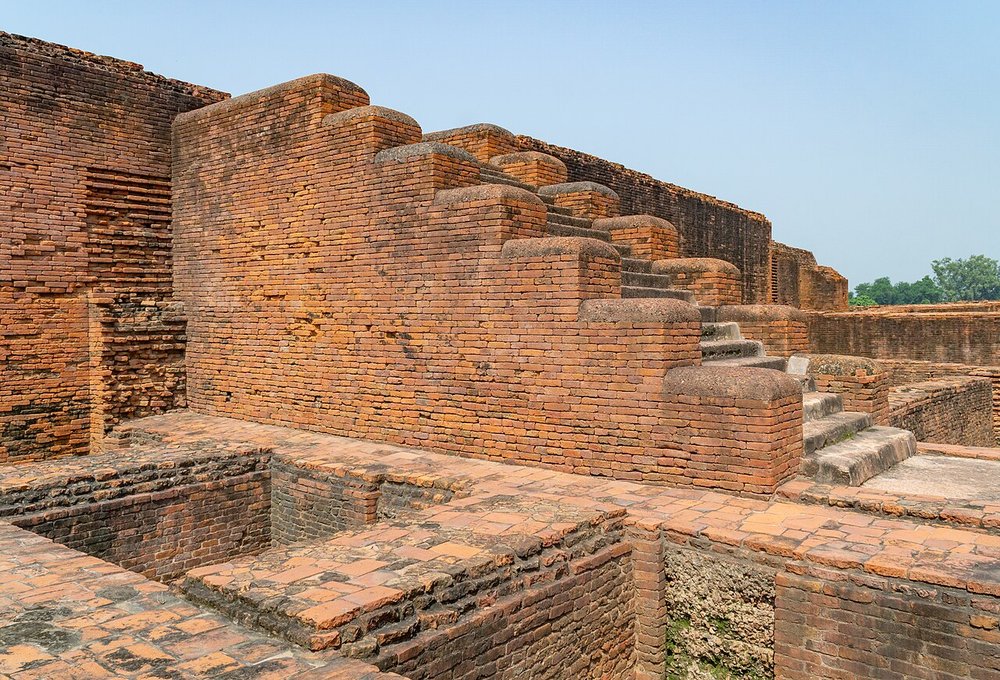
Under Kumaragupta I, who reigned from about 415 to 455 CE, the university of Nalanda was founded, around 427 CE, in what is now Bihar. It grew into the world's first great residential university, attracting thousands of students from across Asia to study Buddhist philosophy, logic, medicine, grammar, and astronomy. Its rise continued after the Guptas themselves had faded.
The end of the golden age
The empire's last strong ruler, Skandagupta, who reigned from about 455 to 467 CE, fought off invasions by the Huns from Central Asia — but the effort drained the treasury. After his death the empire broke into smaller kingdoms, and by about 550 CE it was gone. The golden age ended, but its gifts did not: zero, the decimal system, Sanskrit literature, and the idea of the university all outlived the dynasty that produced them.
| Ruler | Reign | Known for |
|---|---|---|
| Chandragupta I | c. 320–335 CE | Founded the empire |
| Samudragupta | c. 335–375 CE | Great conqueror; "Napoleon of India" |
| Chandragupta II | c. 375–415 CE | Peak of the empire; Kalidasa's patron |
| Kumaragupta I | c. 415–455 CE | Founded Nalanda University |
Sources: Wikipedia, "Gupta Empire"; Encyclopaedia Britannica, "The Gupta period"; World History Encyclopedia, "Gupta Empire"; UNESCO, "Nalanda Mahavihara" Checked 27 November 2026.