The Independence Movement and Gandhi: Freedom Without Violence
For almost ninety years after 1857, Indians sought freedom from British rule — first through petitions, then through protest, and finally through mass movements that filled the jails and emptied the streets. The man who turned a political campaign into a movement of millions was Mohandas Gandhi, who returned from South Africa in 1915 with a weapon no army could defeat: satyagraha, non-violent resistance. His campaigns — Non-Cooperation, the Salt March, Quit India — made India's freedom struggle famous around the world.
In short
The Indian independence movement grew from the founding of the Indian National Congress in 1885 into mass campaigns under Mahatma Gandhi — Non-Cooperation in 1920, the Salt March in 1930, and Quit India in 1942. Its method was satyagraha, non-violent resistance, and it ended with independence on 15 August 1947.
The Congress and the early movement
The organised national movement dates from 28 December 1885, when the Indian National Congress held its first session in Bombay, attended by 72 delegates under its first president, W. C. Bonnerjee. It was founded with the help of a retired British civil servant, A. O. Hume. For twenty years the Congress was moderate, asking for more Indian participation in government through petitions and speeches. After the Partition of Bengal in 1905, the movement grew bolder: the Swadeshi campaign urged Indians to boycott British goods and buy Indian-made cloth.
The First World War changed the mood. Indians had fought and died for Britain, and they expected reform in return. Instead they got the Rowlatt Act of 1919, which allowed detention without trial, and then the Jallianwala Bagh massacre of 13 April 1919, when British troops under General Dyer fired on an unarmed crowd in Amritsar, killing hundreds. Faith in British justice was shattered — and the moment was Gandhi's.
Gandhi and satyagraha
Mohandas Karamchand Gandhi had spent 21 years in South Africa, where he developed satyagraha — "truth-force", the method of non-violent resistance. He returned to India in 1915 and tested it in small campaigns: at Champaran in 1917, defending indigo peasants in Bihar, and at Kheda in 1918, winning tax relief for drought-hit farmers. Then, in 1920, he launched the Non-Cooperation Movement, the first mass campaign: Indians were asked to give up British titles, leave British schools and courts, and boycott British cloth in favour of homespun khadi. Millions joined. In February 1922, after a crowd burned a police station at Chauri Chaura and killed 22 policemen, Gandhi called the movement off — he would not lead a violent movement.
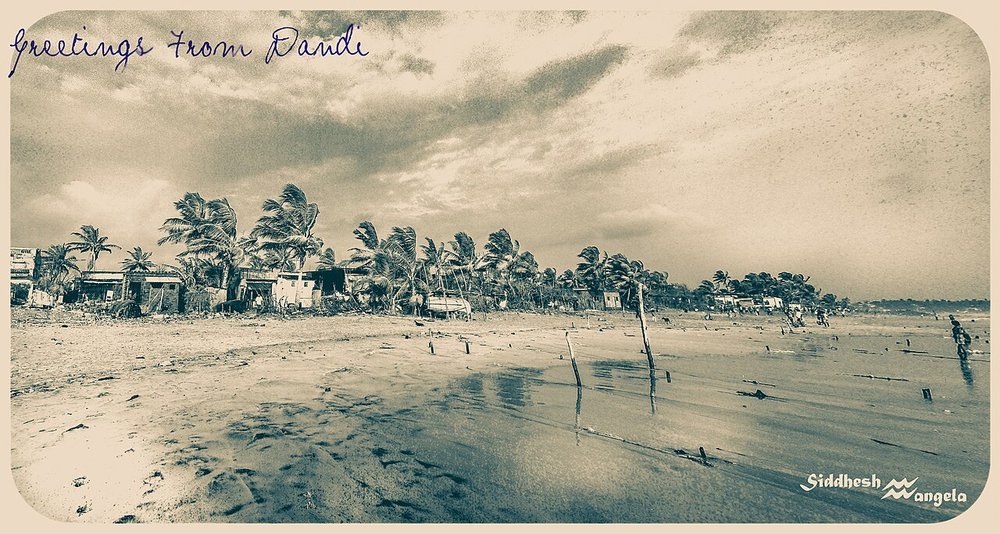
The Congress adopted the goal of complete independence, Purna Swaraj, at its Lahore session in December 1929. Then came Gandhi's most famous act. On 12 March 1930 he set out from Sabarmati Ashram with 78 followers on the Salt March, walking about 387 kilometres to the coast at Dandi, where on 6 April he broke the salt law by picking up a lump of salt. The British had taxed salt, a necessity of life, and the march turned a tax into a symbol. Tens of thousands joined the Civil Disobedience Movement that followed, and thousands were jailed.
Quit India and the end of the Raj
The 1930s brought the Government of India Act of 1935, which gave Indians a larger share in provincial government, but not freedom. Then came the Second World War, and in 1942 the Congress launched its last great campaign: the Quit India Movement, launched on 8 August 1942, demanding that the British leave at once. Gandhi's message was "Do or Die". The British arrested him and the other Congress leaders the next day, and a leaderless uprising swept the country. It was crushed — but it showed that British rule could no longer command consent.
After the war, Britain was exhausted, and the Indian armed forces themselves were restless — the naval mutiny of 1946 was a warning. Negotiations followed, and in February 1947 Britain announced it would leave by June 1948. The new Viceroy, Lord Mountbatten, advanced the date to August 1947. On 15 August 1947, India became independent. Gandhi himself was not in Delhi for the celebrations: he was in Calcutta, fasting to stop communal violence, and he was assassinated five months later, on 30 January 1948.
The movement was never Gandhi's alone. It included the revolutionaries who chose armed struggle, the leaders of the Indian National Army under Subhas Chandra Bose, and millions of ordinary people — students, peasants, workers, and women — who marched, boycotted, and went to jail. But it was Gandhi who made the movement a mass one, and who made non-violence its signature — an idea that later inspired civil rights movements around the world.
| Year | Event |
|---|---|
| 1885 | Indian National Congress founded |
| 1915 | Gandhi returns from South Africa |
| 1919 | Jallianwala Bagh massacre |
| 1920–22 | Non-Cooperation Movement |
| 1930 | Salt March and Civil Disobedience |
| 1942 | Quit India Movement |
| 1947 | Independence, 15 August |
Sources: Wikipedia, "Indian independence movement"; Encyclopaedia Britannica, "Indian National Congress"; The Hindu, "Road to freedom"; Encyclopaedia Britannica, "Mahatma Gandhi" Checked 27 November 2026.