The Delhi Sultanate: Five Dynasties, Three Centuries
In 1192, near Tarain in present-day Haryana, the Ghurid conqueror Muhammad Ghori defeated the Rajput ruler Prithviraj Chauhan and opened northern India to a new kind of rule. When Ghori was assassinated in 1206, his former slave and general, Qutb-ud-din Aibak, took power in Delhi — and so began the Delhi Sultanate, which would rule large parts of India for more than three centuries, through five dynasties, until a new conqueror from Central Asia ended it in 1526.
In short
The Delhi Sultanate lasted from 1206 to 1526, ruled by five dynasties — Mamluk, Khalji, Tughlaq, Sayyid, and Lodi. It brought Persian as the language of administration, built the Qutub Minar, and was ended when Babur defeated the last sultan, Ibrahim Lodi, at the First Battle of Panipat.
How the Sultanate began
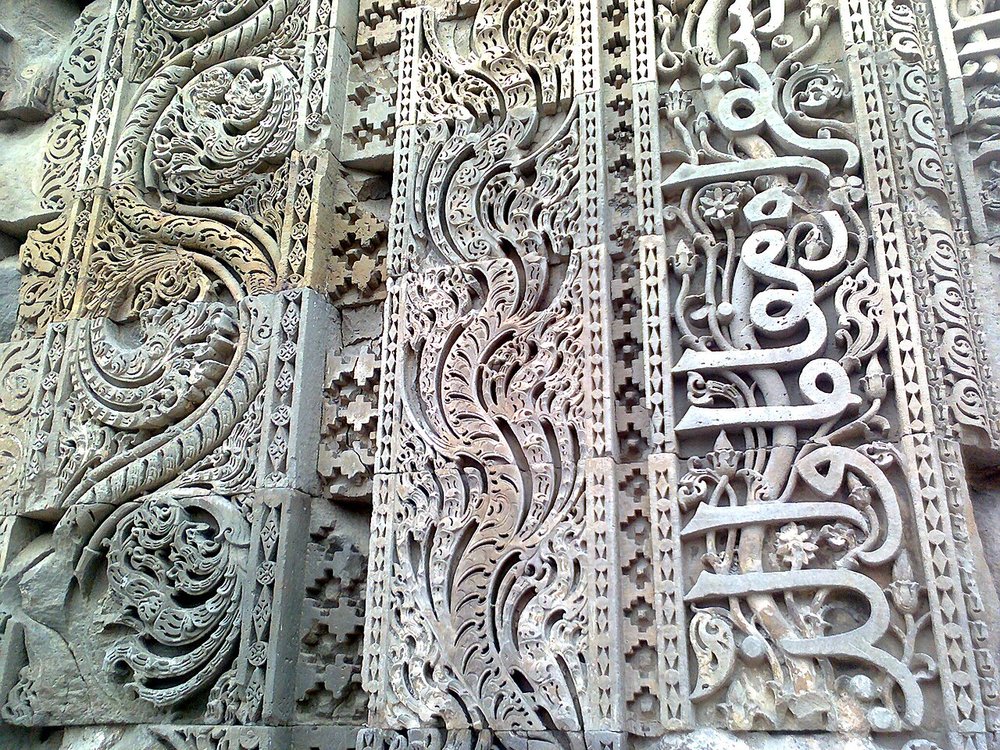
The foundation was laid by Muhammad Ghori, who conquered Delhi and the Ganges plain in the 1190s. When he died in 1206, his empire in India was divided among his Turkic slave-generals, and Qutb-ud-din Aibak — a former slave of Ghori — became the first Sultan of Delhi. He reigned only four years, from 1206 to 1210, but he began the Qutub Minar, the great victory tower in Delhi, and built the Quwwat-ul-Islam mosque beside it. The tower was completed by his son-in-law and successor, Iltutmish, who reigned from 1211 to 1236 and did the real work of consolidating the new state: he strengthened the iqta system of land grants, introduced the silver tanka and copper jital coins, and won recognition from the Abbasid Caliph in Baghdad.
The first dynasty is called the Mamluk dynasty — mamluk means "slave" — because its rulers had risen from slavery to the throne. Among them was Razia Sultana, who ruled from 1236 to 1240, one of the very few women to rule a Muslim state in medieval India. She was deposed and killed by nobles who would not accept a woman on the throne. The dynasty's last strong ruler was Ghiyasuddin Balban, who reigned from 1266 to 1287 and crushed rebellions with an iron hand.
The Khaljis: expansion and price control
In 1290 the Khalji dynasty took power. Its greatest ruler, Alauddin Khalji, reigned from 1296 to 1316 and expanded the Sultanate further than any sultan before him, carrying its armies into Gujarat, Rajasthan, and the Deccan. He also fought off repeated Mongol invasions from the north-west, and he is famous for his market reforms: he fixed the prices of grain, cloth, and other goods, and set up a system of branding horses and keeping written descriptions of soldiers — the dagh and huliyah system — to stop fraud in the army.
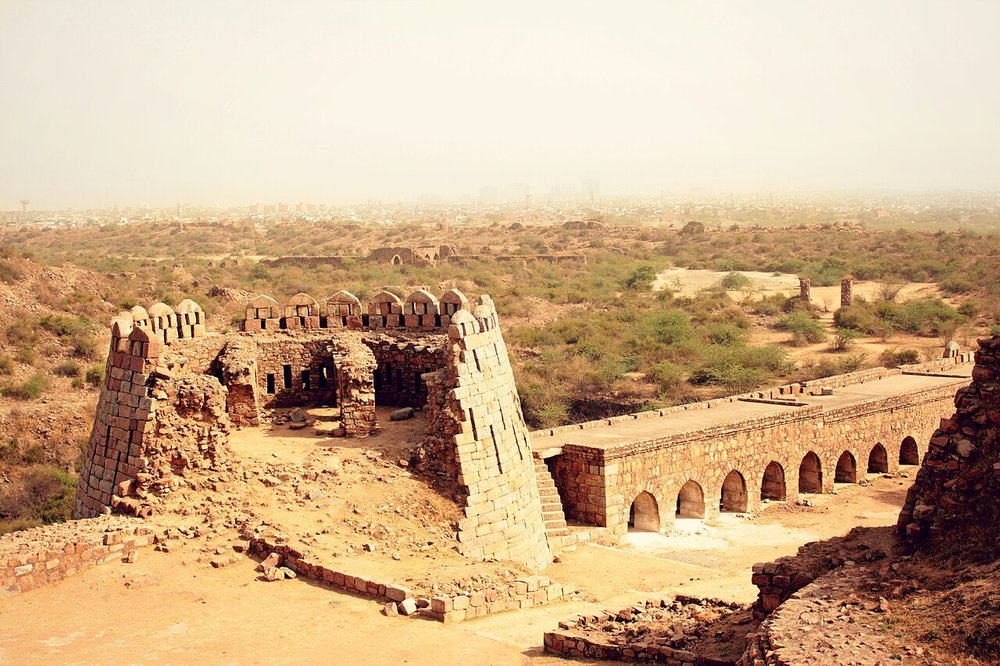
The Tughlaq dynasty followed, from 1320 to 1414. Its second ruler, Muhammad bin Tughlaq, is remembered for his bold but disastrous experiments: he moved the capital from Delhi to Daulatabad in the Deccan in 1327, then moved it back a few years later after the move caused enormous suffering, and he introduced token copper coins that were quickly forged. The Sultanate never fully recovered its strength.
Timur, the Sayyids, and the Lodis
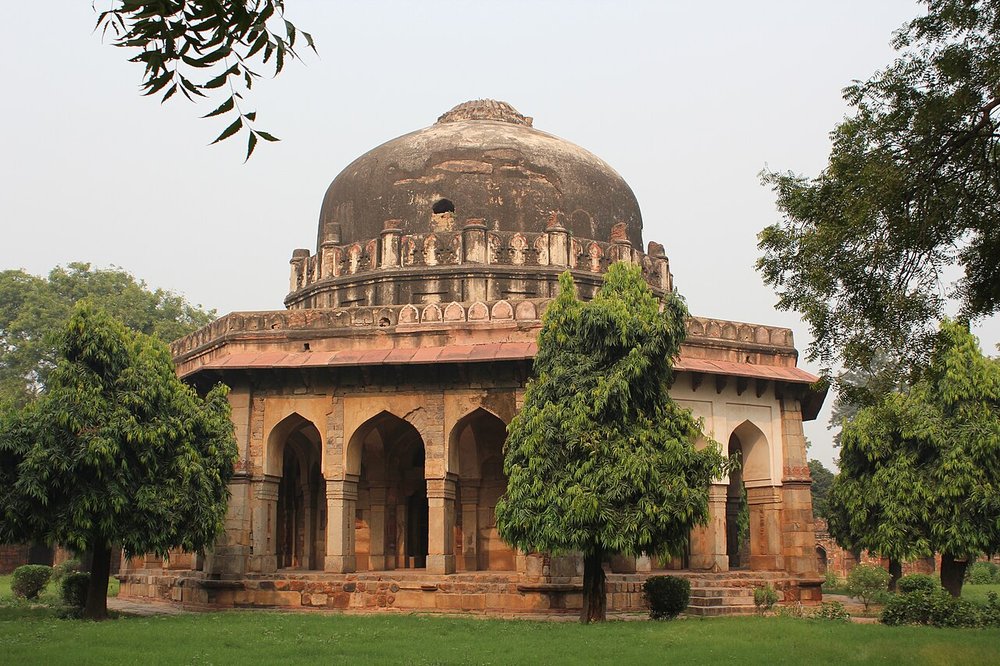
In 1398 the Central Asian conqueror Timur sacked Delhi, massacring its people and carrying away its craftsmen, and the Sultanate shrank to a shadow of itself. The Sayyid dynasty (1414–1451) ruled a small territory around Delhi, and the Lodi dynasty (1451–1526) — the first Afghan dynasty — restored some order under Bahlul Lodi and Sikandar Lodi, who moved the capital to Agra.
The last sultan, Ibrahim Lodi, who reigned from 1517 to 1526, quarrelled with his own nobles, and some of them invited Babur, a Timurid prince from Central Asia, to invade. On 21 April 1526 Babur defeated Ibrahim Lodi at the First Battle of Panipat, using field guns and a disciplined army against a much larger force. The Sultanate was over, and the Mughal Empire had begun.
What the Sultanate left behind
The Sultanate's legacy was lasting. Persian became the language of administration and high culture in northern India, a position it held for centuries. The iqta system, the tanka coinage, and the Sultanate's style of Indo-Islamic architecture — visible in the Qutub Minar complex, a UNESCO World Heritage Site — shaped the India that followed. And the Sultanate's long rule showed that an empire based in Delhi, ruling over a largely Hindu population with a Muslim court, could endure for centuries — a pattern the Mughals would repeat.
| Dynasty | Dates | Leading rulers |
|---|---|---|
| Mamluk (Slave) | 1206–1290 | Aibak, Iltutmish, Razia Sultana, Balban |
| Khalji | 1290–1320 | Alauddin Khalji |
| Tughlaq | 1320–1414 | Muhammad bin Tughlaq |
| Sayyid | 1414–1451 | Khizr Khan |
| Lodi | 1451–1526 | Sikandar Lodi, Ibrahim Lodi |
Sources: Wikipedia, "Delhi Sultanate"; Encyclopaedia Britannica, "The Delhi sultanate"; UNESCO, "Qutb Minar and its Monuments, Delhi"; World History Encyclopedia, "Delhi Sultanate" Checked 27 November 2026.